 English
  Español
  简体中文
简体中文  Pусский
  українська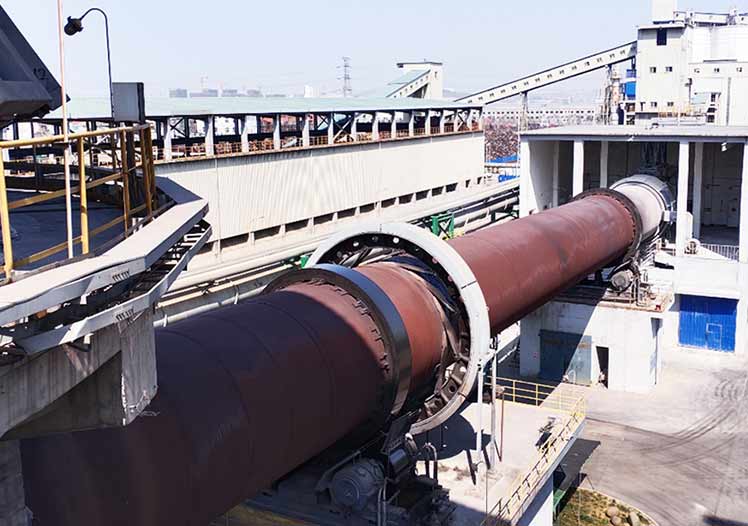
Ceramic Proppant Production Line (Oil Fracturing Proppant Plant) Опис продукту
Over 500 Projects Worldwide, we provide flowchart design, projects solution for our customers.


Three Types of Ceramic Production Plants:
proppant production lines are industrial systems used to manufacture high-strength granular materials (primarily ceramic proppants or fracturing sand) employed in hydraulic fracturing to maintain open rock fractures.
Depending on the raw material, machinery and processes vary significantly:
1. Ceramic Proppant Production Line: The most complex, involving high-temperature sintering. It uses bauxite or kaolin to manufacture engineered beads with exceptional compressive strength (up to 10,000+ psi), suitable for deep wells.
2. Fracturing Sand Production Line: Focuses on cleaning, drying, and precise screening of natural quartz sand (e.g., “Northern White Sand”).
3. Resin-Coated Production Line: Adds a coating process to sand or ceramic proppants to enhance particle bonding and prevent “backflow.”


Particle Size of Ceramic Sand Granulators for Oil Fracturing Proppant Plant
Grade 1: 0.45-0.9mm (20 mesh-40 mesh) High Strength Medium Density
Grade 2: 0.9-1.25mm (16 mesh-20 mesh) High Strength Medium Density
Grade 3: 1.0-1.70mm (12 mesh-18 mesh) High strength, medium density
rade 4: 0.224-0.65mm (40 mesh-60 mesh) High strength, medium density

Flowchart Design of Ceramic Proppant Process Flow
A typical ceramic proppant production line includes the following steps:
1. Raw Material Preparation: Bauxite ore is crushed by jaw/hammer crushers, then ground into fine powder (<300 mesh) using ball mills.
2. Pelletizing: Powder is mixed with binders and additives in pellet mills to form spherical “green pellets.”
3. Sintering: Green balls are sintered in a rotary kiln at high temperatures (up to 1600°C) to achieve ceramic strength.
4. Cooling and Screening: Proppants are cooled in a rotary cooler, then separated by particle size (e.g., 20/40 mesh or 40/70 mesh) using vibrating screens.


Key Equipment Costs of Oil Proppant Plant
| Equipment | Function | Approximate Cost (Single Line) | |
| Rotary Kiln | High-temp sintering | $100,000 – $500,000+ | |
| Ball Mill | Fine grinding of bauxite | Varies by capacity | |
| Granulator | Spherical ball formation | $49,800 – $100,000+ | |
| Dust Collector | Environmental compliance | Integrated in most sets | |
Complete Production Line Pricing: Turnkey project costs typically range from $100,000 to over $1,000,000, depending on automation level (PLC/SCADA) and capacity (e.g., 150 to 800 tons per day).


Technical Standards of one successful Oil Fracturing Proppant Plant
Production must strictly adhere to American Petroleum Institute (API) and ISO standards. Key performance indicators include:
1. Compressive strength: Capability to withstand extreme downhole confining stresses.
2. Sphericity/roundness: Ensures high permeability and low injection friction.
3. Acid solubility: Resistance to reservoir chemical environments.
Ceramic Proppant Production Line (Oil Fracturing Proppant Plant) Конфігурація продукту
| Indicator | Unit | Quantities | |||
| Capacity | t/a | 10000 | 20000 | 30000 | 50000 |
| Low Density/High StrengthProportion | % | 80 | 80 | 80 | 80 |
| Raw Material | |||||
| Bauxite | t/a | 10400 | 20800 | 31200 | 52000 |
| Manganese powder | t/a | 200 | 400 | 600 | 1000 |
| Additives | t/a | 1000 | 2000 | 3000 | 5000 |
| Power consumption | |||||
| Fresh Water | t/a | 3000 | 6000 | 9000 | 15000 |
| Electricity | kWh/a | 2800000 | 5600000 | 8400000 | 14000000 |
| Gas | Nm3/a | 1800000 | 3600000 | 5400000 | 9000000 |
| General map transport | |||||
| Land Area | m2 | 30000 | 45000 | 61000 | 75000 |
| Staff | No. | 50 | 80 | 110 | 145 |
| Economic Indicators | |||||
| Investment | Million(CNY) | 9.6 | 15 | 18 | 27 |
| Profit Rate | % | 84 | 84 | 84 | 84 |
| Payback Period(After Tax) | Year | 1.53 | 1.53 | 1.53 | 1.53 |